
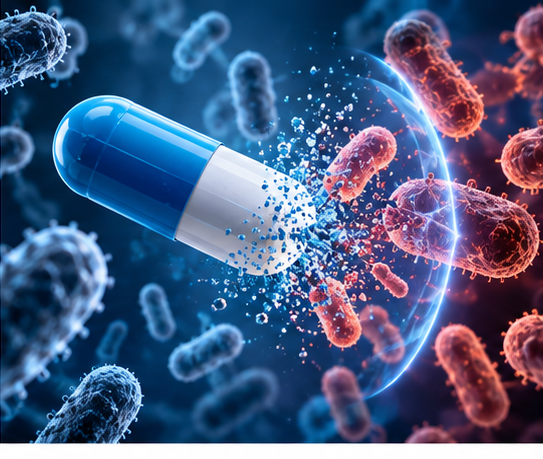
Antibiotics have transformed medicine.
Infections that were once extremely dangerous can often be successfully treated because of them.
But there is a growing problem: some bacteria are becoming increasingly resistant to the medicines designed to kill them.
This phenomenon is part of antimicrobial resistance (AMR).
WHO’s July 2026 update estimates that approximately one in six laboratory-confirmed bacterial infections worldwide in 2023 was resistant to antibiotics.
Here’s what everyone should understand.
1. Your Body Doesn’t Become Resistant
This is a common misconception.
Antimicrobial resistance occurs when microorganisms such as bacteria, viruses, fungi and parasites change in ways that allow them to survive medicines that previously worked against them.
The microorganisms become resistant—not your body.
2. Antibiotics Don’t Treat Every Infection
Antibiotics work against bacterial infections.
They don’t treat viral illnesses simply because someone feels sick.
Using antibiotics when they aren’t necessary contributes to the broader resistance problem.
3. Misuse and Overuse Matter
WHO identifies inappropriate antimicrobial use as one of the major drivers of resistance.
That makes responsible use important.
Antibiotics should be used according to guidance from a qualified healthcare professional rather than taken simply because they’re available.
4. Resistant Infections Can Be Harder to Treat
When commonly used medicines stop working, healthcare professionals may have fewer treatment options.
This can contribute to longer illnesses, increased healthcare costs and greater risk of serious complications.
WHO estimates bacterial AMR was associated with more than 4.7 million deaths globally in 2021.
5. The Problem Isn’t Limited to Humans
Antimicrobial use occurs in human health, animal health and agriculture.
Resistance can also spread through food systems and the environment.
That’s why addressing AMR requires what public-health organizations call a One Health approach.
6. Preventing Infection Helps
One of the easiest ways to reduce antibiotic use is to prevent infections from occurring in the first place.
Useful measures include appropriate vaccination, hand hygiene, safe food preparation, clean water and good infection-control practices.
Vaccination is particularly important because preventing infections can reduce the need for antimicrobial treatment.
7. Everyone Has a Role
You don’t need to be a doctor or scientist to contribute.
Don’t pressure healthcare professionals for antibiotics when they aren’t appropriate. Don’t use leftover prescription antibiotics as a substitute for medical advice, and follow the directions you’re given when antibiotics are prescribed.
Final Thoughts
Antibiotic resistance sounds like a distant scientific issue, but its consequences can affect ordinary infections, surgeries and healthcare.
Protecting these medicines requires responsible use by individuals, healthcare systems, agriculture and governments.
The antibiotics we preserve today may be the medicines someone desperately needs tomorrow.