
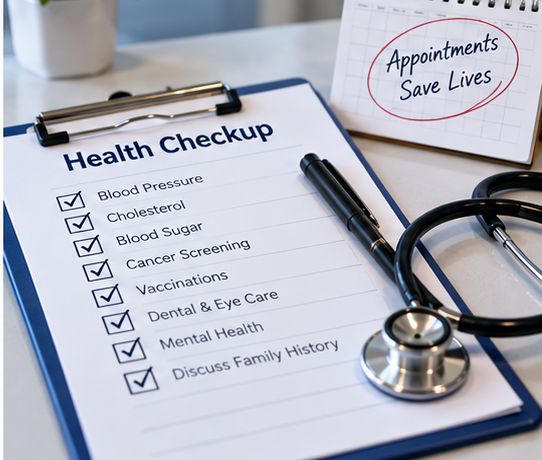
It’s easy to postpone a medical appointment when nothing feels wrong.
But that’s exactly why preventive healthcare matters.
Some important health problems can develop before obvious symptoms appear, and prevention gives you an opportunity to identify risks earlier.
Your exact screening schedule depends on factors such as age, sex, family history, medical history, lifestyle and country-specific recommendations. So rather than treating an online checklist as a prescription, use it to prepare for a conversation with your healthcare professional.
1. Blood Pressure
High blood pressure can exist without obvious symptoms.
Ask whether your blood pressure is within an appropriate range and how frequently it should be checked.
2. Cholesterol and Cardiovascular Risk
Cholesterol is only one part of cardiovascular health.
Your healthcare provider may consider factors such as age, blood pressure, smoking, diabetes and family history when assessing cardiovascular risk.
3. Blood Sugar and Diabetes Risk
Depending on your risk factors, your provider may recommend testing related to blood glucose or diabetes.
Family history, age, weight and other health factors can influence when screening is appropriate.
4. Cancer Screening
Cancer screening isn’t identical for everyone.
Depending on your age, sex, anatomy, medical history and risk factors, your healthcare professional may discuss screening for cancers such as colorectal, breast, cervical, lung or prostate cancer.
The appropriate test and timing should be individualized.
5. Vaccination Review
Ask your healthcare provider to review your vaccination history.
Adult vaccination recommendations can vary according to age, health status, occupation, pregnancy, previous vaccination and travel.
6. Dental and Eye Health
Preventive health extends beyond your primary-care appointment.
Regular dental care can identify oral-health problems, while eye examinations may identify vision problems and, in some circumstances, signs associated with other health conditions.
7. Mental Health
A preventive health conversation should include how you’re feeling emotionally—not simply your blood pressure and laboratory results.
If you’ve experienced persistent anxiety, low mood, sleep changes, stress or other concerns, mention them.
8. Know Your Family History
Before an appointment, learn what you can about significant conditions affecting close relatives.
Family history can help healthcare professionals understand your risk profile and determine whether earlier or different screening might be appropriate.
Create Your Personal Health Record
Consider keeping a secure record containing:
- Current medications
- Allergies
- Major diagnoses
- Previous surgeries
- Vaccinations
- Important test results
- Family medical history
- Emergency contact information
Having accurate information available can make healthcare visits more productive.
Final Thoughts
Preventive healthcare isn’t about searching for something to worry about.
It’s about understanding your health before problems become emergencies.
Instead of asking:
“Do I need every test on this list?”
Ask your healthcare provider:
“Based on my age, history and risk factors, which preventive screenings are appropriate for me?”
That one conversation can help turn a generic health checklist into a preventive-care plan designed around you.